 Physiotherapy
 Nursing
 Medical Equipment
 Trained Attendants
 Lab Tests
 Elder Care
 Doctor Consultation
 Mother & Baby Care
 Diabetes Care
 Critical Care
 Covid Care
 Vaccination
 Counselling
 Nutrition & Diet Consultation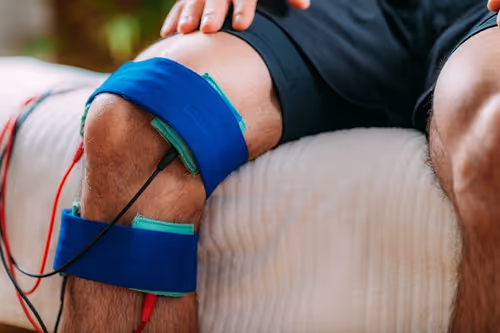
Hi,
I am a premium package member ( patient name: Nikhat Begum)
I just wanted to thank the customer support team. Especially Partha Sarthy, he has been extremely helpful and prompt in solving my concerns. I am very happy about how he went out of his way to make things happen in a timely manner and followed up post-resolution.
- 4.8On Google
- Background-verified professionals
Expert Physiotherapy at Home
Certified physiotherapists visit you at home to provide focused, one-on-one care tailored to your needs. With no travel or waiting rooms, recovery happens in a setting that is comfortable, familiar, and built around your convenience.
Personalised Recovery Programmes
Every treatment plan is designed to suit your condition, goals, and pace. Our physiotherapists follow structured, evolving protocols to ensure consistent progress, with each session aligned to deliver meaningful results.
Trusted Physiotherapists. Real Results.
Our team comprises experienced, background-verified physiotherapists trusted by thousands of families. With a strong focus on safety, reliability, and clinical outcomes, we make recovery at home both effective and reassuring
Patient Testimonials
Real experiences from the families we care for
To whom this letter of recommendation may concern.
Dear Sir,
I would like to share our very positive feedback concerning your business partner Vinay Venugopal.
He has been nothing but diligent and efficient in organising PCR tests for the whole family on behalf of Portea. And this several times being particularly proactive in paving the way through the registration and payment processes of the company, smoothing the way out for us right form the start until we received our results.
Kindly take this recommendation as a priority as Vinay Venugopal is certainly an added value to any company he would offer his services to.
Not to mention being able to communicate in English with him really took the stress off the whole medical process, which can certainly not be said for other laboratory partners.
This is one of the reasons we will carry on giving our business to Portea.
Best regards,
Johanna SALVADO and Family
The physiotherapist behaved professionally and the service was good. Call center executives were also good at addressing my concerns Thank you Santosh You have honestly done your job here. I got the account into my account
Hello Mr. Parthasarathi,
I am very much delighted to thank you for your immediate response to sort out the problem and difficulty I was facing to get the Blood test reports due to some problem. First the reports sent to me were incomplete.
Then you come into this picture and you are able to listen carefully to the problems I was facing from morning.
With your personal efforts I was able to get the full and Complete Email blood reports.
Thank you for your timely help.
Best wishes.”I, Raghav Pant got tested positive for COVID 19 on the 19th of April. Post that I was admitted to the hospital for continuous dip in my saturation / oxygen levels. I was admitted for 9-10 days where I underwent treatment.
During the course of my treatment in the hospital I was introduced to Dr. Neeraj (Physiotherapist), with whom I had few physiotherapy sessions in the hospital. Dr. Neeraj is a highly professional doctor, he not only understood the need of the hour i.e. my treatment but also counselled and motivated me to get better , something I believe was more important than anything else at that time.
Through Portea I was fortunate enough to get Dr. Neeraj as my physiotherapist once I got discharged from the hospital. Both my mother and myself took 5 days of session with the Doctor and after 5 days our saturation level peaked to 97/98, all thanks to the dedication , motivation provided by Dr. Neeraj to my mother and myself who have now completely recovered.
I would like to take this opportunity to thank Portea and Dr. Neeraj for helping us in our road to recovery post COVID 19.
Thank you
Raghav PantDear Portea,
My dad really likes the physiotherapist. It’s made a big difference to his walk and well-being already.
Many thanks for this.Kavitha Buggana
I got my bloodwork done at Portea. The whole process was smooth and professional. My appointment was booked for 12 noon and the person came by 11:55am. They sanitized themselves and all the equipment was new and sealed. The blood draw was painless and fast. The whole process lasted just 5 mins. The next morning I received all my bloodwork via email. This is the most convenient and high quality experience of blood diagnostics I’ve had. Highly recommend to anybody and everybody! I will never visit a clinic for this again.
I had a very good experience with (Magimai rani) who visited our house and helped us.Thanks..!
Rakesh was excellent with the service and he was able to diagnose the problem very soon and gave the right treatment.
I was feeling better just after one session. Highly recommend him!Dr. Ritu was very helpful for my recovery post surgery. She has done a lot of effort to make me feel relaxed as well as energetic at the same time. After her session I am back to my job now. Thanks.
Portea Physiotherapists for Home Visits
Meet some of our experienced and dedicated healthcare professionals
![Hirak Subhra Chatterjee - Physiotherapist at Portea Medical]()
Hirak Subhra Chatterjee
Physiotherapist
18+ yrs experience
- Orthopedic
- Musculoskeletal
- Sports rehab
- +6 more
![V Saravanakumar - Physiotherapist at Portea Medical]()
V Saravanakumar
Physiotherapist
15+ yrs experience
- Adult Neurology
![Sabyasachi Ghosh - Physiotherapist at Portea Medical]()
Sabyasachi Ghosh
Physiotherapist
BPT · MPT·12+ yrs experience
- Orthopedic
- Musculoskeletal
- Exercise Physiology
- +2 more
![Prakash Vadivel - Physiotherapist at Portea Medical]()
Prakash Vadivel
Physiotherapist
12+ yrs experience
- Adult Neurology
![Amin . - Physiotherapist at Portea Medical]()
Amin .
Physiotherapist
MPT·10+ yrs experience
- Knee Pain
- Neck Pain
- Back Pain
- +7 more
![Nidhi Bhalla - Physiotherapist at Portea Medical]()
Nidhi Bhalla
Physiotherapist
BPT·10+ yrs experience
- Adult Neurology
- Paediatric Neurology


Your journey to a pain-free future starts here
Personalised Physiotherapy at Home
Flat 10% Off on booking packages
Book Now*T&C apply


Interferential Therapy in Physiotherapy
Interferential Therapy (IFT) is a clinically approved electrotherapy technique used in physiotherapy to manage pain, reduce inflammation, and accelerate healing. Widely adopted in rehabilitation centres and hospitals, IFT physiotherapy offers a non-invasive solution to various musculoskeletal and neurological conditions. It’s beneficial for those who experience persistent or acute pain due to injury, arthritis, or post-surgical recovery.
Role of Interferential Therapy in Recovery
Living with chronic pain or recovering from an injury can feel exhausting, and finding a treatment that offers real, lasting relief matters deeply. Interferential therapy, or IFT, is a well-established electrotherapy technique used in physiotherapy to support the body’s natural healing process.
The benefits of IFT physiotherapy are wide-ranging: it helps reduce pain by blocking pain signals at the nerve level, improves blood circulation to the treated area, relaxes tight and overworked muscles, and accelerates tissue repair. The benefits of IFT extend to patients managing conditions like musculoskeletal injuries, joint stiffness, and post-surgical recovery, making it a trusted tool in guided rehabilitation programmes.
Benefits of IFT in Physiotherapy Recovery
The benefits of IFT in physiotherapy recovery include meaningful pain reduction, reduced inflammation, and improved joint mobility. For patients managing these chronic conditions, treatment of neck strain and other muscle strains helps restore normal movement patterns without placing stress on the injured tissue, supporting a steadier and more comfortable path to recovery.
Types of IFT Used in Physiotherapy
IFT therapy is delivered using several distinct methods, each chosen based on the patient’s condition, the area being treated, and the clinical goals of the physiotherapy programme. Understanding the different types helps patients and caregivers have informed conversations with their physiotherapist about the most suitable approach. Below is an overview of the commonly used types of interferential therapy in clinical practice.
Premodulated Interferential Therapy
Among the types of IFT, premodulated interferential therapy uses a single channel where the two medium-frequency currents are mixed within the machine before being delivered to the body. It is simpler to set up and is often used when electrode placement in a quadripolar arrangement is not feasible, making it accessible for a wider range of patients.
Bipolar Interferential Therapy
Bipolar IFT uses two electrodes and delivers the interferential current through a single circuit. It is particularly useful for treating localised areas and is a preferred option for patients experiencing neck spasms or concentrated muscle tightness in a defined region, allowing the therapist to direct treatment precisely where it is needed most.
Quadripolar Interferential Therapy
Quadripolar IFT is the most widely used type in clinical physiotherapy. It uses four electrodes arranged so that two medium-frequency currents cross each other within the tissue, creating an interference pattern in the area of overlap. This approach is particularly effective for deeper structures, including the muscle in the back, where penetrating the tissue fully is important for effective pain relief and rehabilitation.
Vector Scan Interferential Therapy
Vector scan IFT automatically rotates the direction of the electrical field during treatment, ensuring that the interference pattern sweeps through a wider area of tissue rather than remaining fixed in one spot. This helps cover a larger treatment zone evenly, reduces the risk of tissue accommodation, and is especially useful when the area of discomfort is not precisely defined.
Dynamic Interferential Therapy
Dynamic IFT involves continuous changes to the treatment parameters during the session, preventing the nervous system from adapting to the stimulus and reducing its effectiveness over time. It is particularly helpful for patients with muscular tightness or chronic soft tissue conditions where sustained stimulation at a fixed parameter would yield diminishing returns with repeated sessions.
Sensory-Level IFT
Sensory-level IFT uses lower current intensities that stimulate sensory nerve fibres without triggering visible muscle contractions. It is primarily used for pain modulation and is a helpful back-of-neck pain remedy for patients with acute sensitivity or those who find stronger stimulation uncomfortable, allowing effective treatment without causing additional distress to inflamed tissue.
Motor-Level IFT
Motor-level IFT uses higher current intensities that activate motor nerve fibres, producing gentle, rhythmic muscle contractions during the session. This makes it effective for addressing back spasms, improving local circulation, and promoting the removal of metabolic waste products from fatigued or injured muscle tissue, supporting faster functional recovery in the area being treated.
Sweep Frequency Interferential Therapy
Sweep frequency IFT continuously cycles the beat frequency through a set range during treatment rather than holding it at a fixed value. This prevents the body from habituating to a single frequency and maintains the therapeutic response throughout the session. It is commonly used in longer treatment courses to ensure that the benefits remain consistent as the patient progresses.
How Interferential Therapy Works in Physiotherapy
IFT in physio works by delivering two medium-frequency alternating currents through skin-surface electrodes. Where these currents meet within the body, they produce a low-frequency therapeutic beat, typically between 1 and 150 Hz, in the targeted tissue. This interference effect allows the current to penetrate deeply with less skin resistance and significantly greater patient comfort than conventional low-frequency methods.
Depending on the frequency used, IFT can stimulate sensory nerve fibres to block pain signals, activate motor fibres to relieve muscle spasm, improve local blood circulation, and encourage tissue repair, making it a versatile and effective component of structured physiotherapy programmes.
How IFT Helps in Pain Relief and Recovery
IFT treatment is a non-invasive approach to pain relief for muscle pain that works through several simultaneous mechanisms. The interferential current stimulates sensory nerve fibres, activating the body’s natural pain gate and reducing the intensity of pain signals reaching the brain. At motor-level frequencies, it produces gentle rhythmic muscle contractions that help release spasm, reduce muscular tightness, and restore normal resting tone.
The therapy also promotes vasodilation in the treated area, enhancing blood circulation and bringing the oxygen and nutrients needed for tissue repair. These combined effects make IFT treatment a reliable tool across rehabilitation, helping patients recover function, improve joint mobility, and return to daily activities more comfortably.
Precautions Before Undergoing IFT Treatment
Before beginning IFT treatment, it is important to be aware of key safety precautions. IFT should not be applied over active malignancy, open wounds, infected tissue, or directly over implanted electronic devices such as pacemakers. It is contraindicated during pregnancy in the abdominal or pelvic region, near the carotid sinus, and should never be placed across the chest or heart.
Patients with epilepsy, deep vein thrombosis, or impaired skin sensation should inform their physiotherapist before treatment. All IFT sessions should be administered under the supervision of a qualified physiotherapist who can assess each patient individually, set appropriate parameters, and ensure safe and effective delivery of care throughout the recovery process.
Common Uses and Indications in Physiotherapy
The uses of IFT are widespread in both outpatient clinics and home physiotherapy routines. Whether you’re dealing with a sports injury or recovering from a long-standing muscular disorder, IFT physiotherapy covers the following:
- Muscle spasms and strains
- Arthritis and joint stiffness
- Post-operative muscle atrophy
- Chronic back and neck pain
- Frozen shoulder
- Sciatica and herniated discs
- Post-fracture rehabilitation
The indications of IFT also extend to cases of neuralgia and even certain forms of constipation and pelvic dysfunctions in clinical paediatrics, as observed in hospital-based protocols.
How to Place Electrodes for IFT Therapy
Correct electrode placement in IFT is crucial for effective therapy. The positioning varies based on the affected area and treatment objective. Generally, four electrodes are used, placed diagonally around the pain site to ensure proper current intersection.
For example, the IFT placement for sciatica typically involves positioning electrodes on the lower back and thigh to cover the sciatic nerve pathway. This helps the interferential current penetrate the whole pain track, offering significant relief.
Incorrect IFT placement may reduce therapy efficiency and even cause skin irritation or discomfort; therefore, it’s always advisable to follow the guidance of a trained therapist or the equipment manual if using IFT at home.
Key Benefits of IFT in Pain Management
There are several clinically validated benefits of IFT physiotherapy, making it a preferred choice for pain management across demographics. Some of the significant IFT physiotherapy benefits include:
- Effective pain relief without medication
- Increased blood circulation to promote tissue repair
- Muscle stimulation for better mobility
- Reduction in inflammation and swelling
- Non-invasive and safe for most age groups
- Customisable settings to suit individual pain thresholds
Many patients report improved range of motion and daily function after consistent IFT sessions, especially when combined with manual therapy or exercise routines.
Possible Side Effects and When to Avoid IFT
While generally safe, IFT physiotherapy side effects may include mild skin irritation or tingling during or after the session. These symptoms are typically short-lived and resolve without intervention.
However, there are specific contraindications of IFT where the therapy is not advised:
Presence of pacemakers or metal implants
- Pregnancy, especially around the abdominal area
- Open wounds or skin infections
- Epilepsy or seizure disorders
- Individuals with circulatory conditions or cancerous lesions
Always consult a certified physiotherapist before starting IFT, especially if you have any pre-existing health conditions.
Is IFT Physiotherapy Safe and Effective for Home Use?
Thanks to advancements in technology, IFT physiotherapy at home is now possible with compact, easy-to-use devices. These home-use machines allow patients to maintain treatment routines without frequent clinic visits.
However, users must follow the device instructions carefully, ensure correct electrode placement, and avoid excessive use. It’s best to start home sessions under the supervision of a licensed physiotherapist or after completing training with one.
IFT at home is particularly helpful for long-term conditions such as osteoarthritis or chronic muscle stiffness, making it a convenient extension of in-clinic care.
How Portea Supports IFT Recovery
For those searching for “interferential therapy near me,” we bring qualified physiotherapy care directly to your home. Our certified physiotherapists deliver personalised treatments at home, assessing each patient’s condition and tailoring IFT parameters to their recovery stage.
We understand that pain and recovery affect the whole family, which is why we also offer elder care support, professional nursing, and trained attendants to provide continuity of care between physiotherapy sessions. Whether you are managing a musculoskeletal condition or supporting a loved one through rehabilitation, our team designs a care plan that is as compassionate as it is clinically effective.
FAQs on Interferential Therapy
1. What are the side effects of IFT?
Mild tingling, temporary skin redness, or irritation may occur. Serious side effects are rare when the medication is used correctly.
2. What frequency is used in IFT physiotherapy?
Typically, medium-frequency currents between 4000 and 4100 Hz are used, with interference patterns generating therapeutic low-frequency effects.
3.Can IFT be combined with physiotherapy exercises?
Yes, IFT is regularly combined with physiotherapy exercises for better outcomes. IFT reduces pain and relaxes muscles before or after exercise, making movement easier and more effective. Your physiotherapist will design a combined programme that uses IFT and targeted exercises together for faster, more complete recovery.
4.How effective is home-based interferential therapy?
Home-based IFT delivered by a qualified physiotherapist is as effective as clinic-based treatment for most conditions. With the right equipment, personalised settings, and professional supervision, patients experience the same therapeutic benefits in a familiar, comfortable environment, which can also improve compliance and reduce the stress associated with travel during recovery.
5.What is interferential therapy (IFT)?
Interferential therapy is an electrotherapy technique that delivers two medium-frequency alternating currents through the skin. Where these currents intersect within the tissue, they produce a therapeutic low-frequency beat that reduces pain, relaxes muscles, and improves circulation. It is widely used in physiotherapy for pain management and rehabilitation across a range of musculoskeletal conditions.
6.How many physiotherapy sessions of IFT are required for recovery?
The number of IFT sessions needed varies depending on the condition, its severity, and the individual patient’s response to treatment. Many patients notice improvement within 6 to 10 sessions, while chronic conditions may require more. Your physiotherapist will reassess progress regularly and adjust the plan accordingly.
Portea Services
Elder Care
Trained Attendant
Physiotherapy
Critical Care
Medical Equipment
Nursing
Doctor Consultation
Mother & Baby Care
Lab Tests
Speciality Pharma
- > Our Team> Blogs> Doctor Speak> Press & Media> Investor Relations> Annual Return> Careers> Partner With Us> Contact Us> FAQs> Testimonials
- > Physiotherapy> Doctor Consultations> Nursing> Medical Equipment> Trained Attendants> Lab Tests> Counselling
- > Physiotherapy for Back Pain> Physiotherapy for sports> Eldercare for Parents> Injections and IVs> Cholesterol tests> Refer a friend
For Bookings and Service queries:
Ph: 1800 121 2323 Email: bookings@portea.comFor Customer Support & Feedback:
Ph: 1800 121 2323 Email:customersupport@portea.com![Facebook]()
![Twitter]()
![Youtube]()
![Instagram]()
![LinkedIn]()


*I agree to be contacted by Portea over phone and email. I do not have any objection to receiving emails, messages (SMS or any other mode) and calls from Portea. This consent shall supersede any preferences set through Do Not Disturb (DND Register)/ National Customer Preference Register (NCPR).
Privacy Policy | Terms and Conditions | Patient Rights & Responsibilities© 2026 Healthvista India Private Limited. All rights reserved.
Portea™ is a brand of Healthvista India Private Limited · CIN: U85300KA2013PTC069291