 Physiotherapy
 Nursing
 Medical Equipment
 Trained Attendants
 Lab Tests
 Elder Care
 Doctor Consultation
 Mother & Baby Care
 Diabetes Care
 Critical Care
 Covid Care
 Vaccination
 Counselling
 Nutrition & Diet Consultation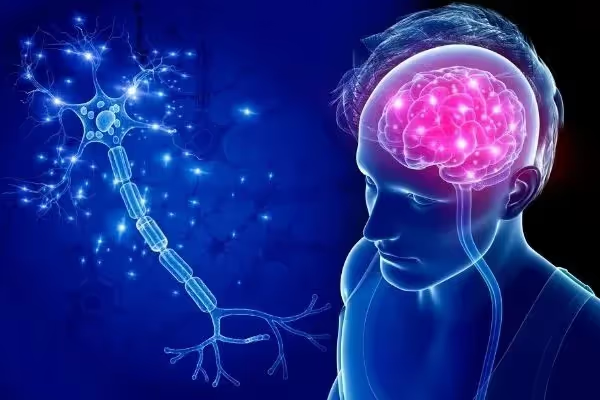
Expert Physiotherapy at Home
Certified physiotherapists visit you at home to provide focused, one-on-one care tailored to your needs. With no travel or waiting rooms, recovery happens in a setting that is comfortable, familiar, and built around your convenience.
Personalised Recovery Programmes
Every treatment plan is designed to suit your condition, goals, and pace. Our physiotherapists follow structured, evolving protocols to ensure consistent progress, with each session aligned to deliver meaningful results.
Trusted Physiotherapists. Real Results.
Our team comprises experienced, background-verified physiotherapists trusted by thousands of families. With a strong focus on safety, reliability, and clinical outcomes, we make recovery at home both effective and reassuring
Patient Testimonials
Portea Physiotherapists for Home Visits
Meet some of our experienced and dedicated healthcare professionals


Dr. Lokesh G
Physiotherapist
Specializations
Experienced in Neurological rehabilitation, Orthopaedic physiotherapy, and Paediatric care
Delivers structured, high-impact treatment plans across neuro, ortho, and paediatrics—ensuring safety, comfort, and measurable recovery at every stage.


Dr. Mohammed Sarwar
Physiotherapist
Specializations
Experienced in Neurological rehabilitation, Adult physiotherapy, and Paediatric care
Combines deep clinical expertise with a compassionate approach, supporting both adults and children through neuro and physical rehabilitation that promotes long-term independence and recovery.


Dr. Nelapati Divya
Physiotherapist
Specializations
Skilled in Orthopaedic rehabilitation, Manual therapy techniques, and Paediatric physiotherapy
Brings a personalised, hands-on approach to healing—combining structural expertise with paediatric sensitivity to restore movement, relieve pain, and improve everyday function.


Dr. Naveen V
Physiotherapist
Specializations
Trained in Pain management, Cardiac and Orthopaedic rehabilitation, Neurological care, and Neural tissue mobilisation
Brings clinical precision and empathy together—designing science-backed recovery protocols for pain relief, nerve mobilisation, and cardio-neuro-ortho rehabilitation across all age groups


Dr. Miloni Savla
Physiotherapist
Specializations
Holds an MPT in Orthopaedics with a focus on Musculoskeletal rehabilitation and strength recovery
Delivers focused, movement-oriented therapy grounded in orthopaedic science—helping patients rebuild strength, restore function, and return to daily life with confidence
Other Cities
Physiotherapy Treatments

introduction to motor neuron disease
Motor neuron disease (MND) is a progressive neurological disorder that affects the motor neurons responsible for controlling voluntary muscle movements. As these neurons deteriorate, patients experience a gradual loss of muscle strength and coordination, eventually leading to significant physical disability. While the exact cause of MND remains unclear, early recognition and management are essential for improving quality of life and slowing the progression of symptoms.
signs and symptoms motor neuron disease
MND typically begins with subtle symptoms, such as muscle weakness, cramps, or twitching. Over time, patients may experience difficulty speaking, swallowing, or breathing as the disease progresses. Muscle stiffness, loss of dexterity, and weight loss due to muscle wasting are also common. Symptoms can vary depending on the type of MND, such as amyotrophic lateral sclerosis (ALS) or primary lateral sclerosis (PLS), but they generally worsen over time, significantly impacting daily life.
causes of motor neuron disease
The exact cause of MND is not fully understood, but it is believed to result from a combination of genetic and environmental factors. Mutations in certain genes have been linked to familial cases of MND, while sporadic cases may be triggered by unknown environmental exposures. Risk factors include advanced age, male gender, and a family history of neurological disorders. Researchers continue to investigate potential causes, including oxidative stress, immune dysfunction, and abnormal protein accumulation in motor neurons.
risks of motor neuron disease
MND is more common in older adults, typically affecting individuals over the age of 50. A family history of the disease or certain genetic mutations increases the risk of developing MND. Exposure to environmental toxins, smoking, or traumatic brain injuries has also been suggested as possible risk factors, although the evidence remains inconclusive. Early identification of symptoms and a thorough medical evaluation are critical for managing the condition effectively.
prevention of motor neuron disease
Currently, there is no known way to prevent MND due to its complex and largely unknown causes. However, adopting a healthy lifestyle, including regular exercise, a nutritious diet, and avoiding known risk factors like smoking, may help reduce the overall risk of neurological conditions. Ongoing research into the genetic and environmental triggers of MND holds promise for identifying preventive strategies in the future.
treatment methods/diagnosis of motor neuron disease
Diagnosing MND involves a comprehensive medical evaluation, including neurological examinations and diagnostic tests such as electromyography (EMG), nerve conduction studies, and imaging scans. Genetic testing may also be recommended in familial cases. While there is no cure for MND, treatment focuses on managing symptoms and improving quality of life. Medications like riluzole can slow disease progression, while physical and occupational therapy help maintain mobility and function. Speech therapy and nutritional support are essential for addressing swallowing and communication difficulties. Advanced cases may require respiratory support through ventilators.
how physiotherapy helps in motor neuron disease
Physiotherapy plays a crucial role in the multidisciplinary management of MND, helping patients maintain strength, flexibility, and mobility for as long as possible. A personalized physiotherapy program includes stretching exercises to reduce stiffness, gentle strengthening exercises to delay muscle atrophy, and breathing exercises to support respiratory function. Physiotherapists also provide guidance on safe mobility techniques and recommend assistive devices to enhance independence. Regular physiotherapy sessions help alleviate discomfort, improve overall function, and maximize quality of life for patients with MND.
how portea helps in motor neuron disease
At Portea, we provide compassionate and expert care for individuals living with motor neuron disease. Our home-based physiotherapy services are tailored to address the specific challenges of MND, focusing on maintaining mobility, relieving discomfort, and enhancing independence in a familiar and supportive environment.
We also specialize in offering physiotherapy for post-surgical rehab, arthritis, neuro-rehabilitation, sports injuries, orthopedic physiotherapy, elderly care, and respiratory therapy – all delivered conveniently at your home. Our dedicated team ensures personalized care to support you through every stage of recovery and management.
portea’s other physiotherapy services based on medical conditions
FAQ’s on Motor Neuron Disease
1. How is motor neuron disease diagnosed?
Motor neuron disease is diagnosed through a combination of medical evaluations, neurological examinations, and tests such as electromyography (EMG), nerve conduction studies, and imaging scans. Genetic testing may be recommended if there is a family history.
2. What role does physiotherapy play in managing MND?
Physiotherapy helps people with MND maintain muscle strength, flexibility, and mobility for as long as possible. A physiotherapist can design exercises to reduce stiffness, strengthen muscles, and assist with breathing and mobility techniques.
3. Can lifestyle changes help manage MND symptoms?
Although there is no cure for MND, maintaining a healthy lifestyle can help manage symptoms. Regular exercise, a balanced diet, and staying away from smoking or environmental toxins may support overall health and well-being.
4. What is the prognosis for someone with MND?
The progression of MND varies among individuals. While the disease is progressive, the rate of progression can differ. Early intervention and supportive care can help manage symptoms and improve quality of life for longer.
5. How can physiotherapy improve the quality of life for MND patients?
Physiotherapy can enhance the quality of life by focusing on pain relief, muscle strengthening, mobility improvement, and providing guidance on the safe use of assistive devices. It also helps with maintaining functional independence as long as possible.
6. What assistive devices can be used to support MND patients?
Assistive devices may include walking aids, mobility scooters, and specialized equipment for eating, dressing, or communication. Physiotherapists can guide patients in selecting the most suitable devices based on their needs.
7. Are there any treatments to slow the progression of MND?
While there is no cure, medications like ribulose can slow the progression of MND. Symptom management through physiotherapy, speech therapy, and nutritional support also play a key role in improving comfort and functionality.
Doctor Consultation
Nursing
Physiotherapy
Trained Attendant
Elder Care
Mother & Baby Care
Lab Tests
Medical Equipment
Speciality Pharma
Critical Care
- > Our Team> Doctor Speak> Press & Media> Annual Return> Careers> Partner With Us> Contact Us> FAQs> Testimonials
- > Physiotherapy> Doctor Consultations> Nursing> Medical Equipment> Trained Attendants> Lab Tests> Counselling
- > Physiotherapy for Back Pain> Physiotherapy for sports> Eldercare for Parents> Injections and IVs> Cholesterol tests> Refer a friend
For Bookings and Service queries:
Ph: 1800 121 2323 Email: bookings@portea.comFor Customer Support & Feedback:
Ph: 1800 121 2323 Email:customersupport@portea.com![Facebook]()
![Twitter]()
![Youtube]()
![Instagram]()
![LinkedIn]()


*I agree to be contacted by Portea over phone and email. I do not have any objection to receiving emails, messages (SMS or any other mode) and calls from Portea. This consent shall supersede any preferences set through Do Not Disturb (DND Register)/ National Customer Preference Register (NCPR).
**Including State Govt. Projects